…responsible for designing many of the station buildings on the Great Eastern Railway lines.


(William) Neville Ashbee 1853 – 1919
On behalf of the Trimley Station Restoration Project, I would like to introduce you to the man behind the building. The aim of the Project is to regenerate the old Booking office and other rooms for the benefit of the Community. The Station building has been in existence since 1891. But who was the man who designed it? What do we know about him? The following blog sets out to answer those questions.
Born in 1852, William Neville Ashbee was the last child of his parents, Mary Corder and John Ashbee. and was known as Neville rather than William. John, then aged fifty, worked as a Superintendent for the newly emerging Great Northern Railway. He held shares in the company and we can guess he held a responsible role. Neville was the youngest of seven children, growing up in Wooton St Mary, now an urbanised part of Gloucester. Then, it was about ten minutes from his home to the Railway Station and when Neville was growing up, it was possible to walk to the station across fields.

Map of Gloucester, 1882[1]. Highlighting Wooton St Mary and the Railway station 6” to the mile.
Ashbee received a good education and clearly showed significant abilities because at the age of 19, in 1871, he was training to be an architect. He began work with Alfred William Maberley,[2] who was the Gloucester Diocesan architect between 1868 – 1874, inferring he was regarded as a talented young architect. Maberley had worked in Gloucester from at least 1860 in other capacities; his projects included the Westbury -on- Severn Workhouse, the Gloucester Infirmaty and also the Workhouse at Kings Lynn. The connection with Ashbee suggests some shared social settings.

19th Century Architects drawing board
After his father’s retirement Ashbee and his family moved to Richmond sometime in the early 1870s. After John’s death in 1876, Neville’s mother remained there, living off an income derived from dividends. Three of his siblings remained with their mother.
Ashbee’s education and training as an architect was extensive. From 1874 he worked in the office of the engineer, Edward Wilson, as the Clerk of works or resident architect during the building of Liverpool Street Station between 1874 – 1876. Promotion followed when he worked as an Assistant Architect in the Architects department between 1877 – 1882. His rise to such an elevated position at a relatively early age reflects well on his talents and abilities.
His professional and practice continued on an upwards trajectory. He was Head of the Architects’ Department working in E. Wilson and Co. between 1882 – 1883. He subsequently became Head of Great Eastern Railway’s Architects’ Department, based Liverpool Street Station from October 1883 onwards.
During 1882 – 1883 he was proposed as an A.R.B.A. on 23rd May 1881 and as a F.R.B.A. on 17th November 1890.

Liverpool Street Station, opened in 1874
In 1883 he married Hannah Berry, the only daughter of a successful and well qualified surgeon, Henry Thomas Berry. He and Hannah set up their domestic environment in Shenfield near Brentwood, where he remained for the rest of his life and just twenty minutes from Liverpool Street. Together, they had five children, three daughters and two sons, who worked in the professional classes. His youngest son, Claude Ashbee followed his father and became an engineering design draughtsman working for W.J. and C.J. Burges[4], Agricultural Engineers and Iron Founders. By 1911 Neville and Hannah were in a comfortable home, Rose Valley House, with a Shenfield address close to Brentwood Station, which he had also designed. The station was three minute walk from where Ashbee lived, providing him with an easy commute to the many stations on the Great Eastern Line. He retired in 1916, through ill health and died on 30th April 1919, leaving £4,365 6s and 8 pence. (Approximately £196, 728 in 2025 monetary terms.)
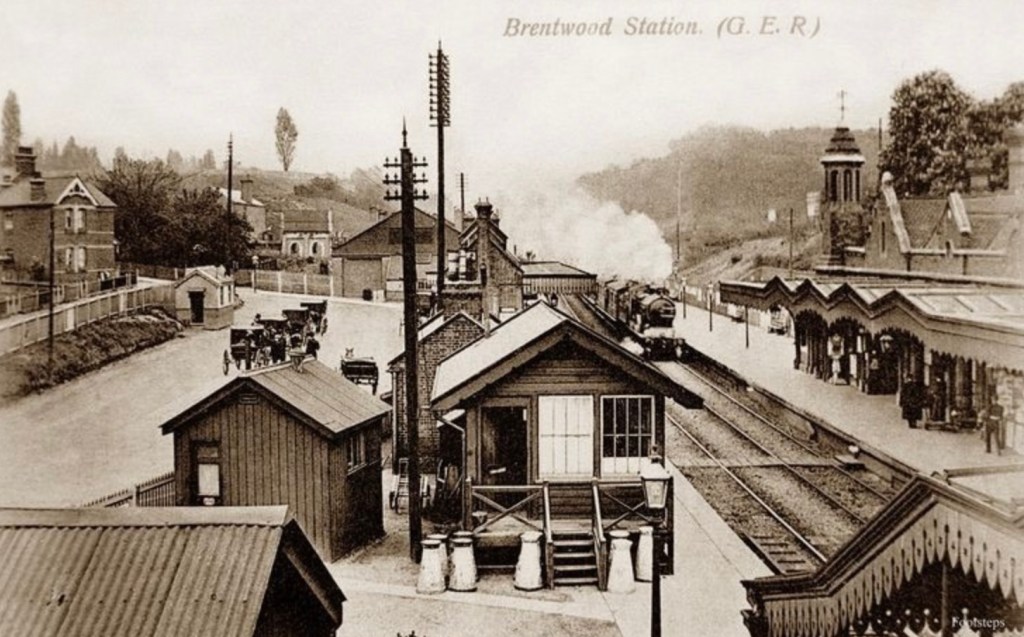
Brentwood Railway Station, c.1910
Neville Ashbee was an important architect who designed many of the stations on the Great Eastern Railway line. His legacy is still visible in a significant number of stations including: Thorpe Station in Norwich, Felixstowe, Manningtree, Ingatestone, Southend Victoria, Hertford East, Buckhurst Hill, Rayleigh, Wickford, Rochford and South Woodham Ferrars.

Norwich, Thorpe Station c.1911
Many people will have visited Ingatestone Station, usually when passengers have to alight from the train at a weekend to transfer to a Bus replacement service. Built in 1885, it is a delightful and pretty example of a station designed in the Domestic Revival Style and is a designated Grade 2 listed building status. It is also Ashbee’s first small station. It reflects the style of nearby Ingatestone Hall and now operates a café on the upside of the station after receiving a grant from the Railway Heritage Trust in 2017. A good example of how a redundant station feature can be revitalised.

Ingatestone Station
What did Ashbee do in Trimley? The building and train service opened in 1891. The station building is one of two still extant in Suffolk, designed in what Ashbee called the ‘New Essex’ style. The remainder are situated in Essex. The rural nature of the Trimley building is an evocative reminder of the many small stations which were sprinkled along important railway lines across the country. Their essence is captured in the well-known poem by Edward Thomas, ‘Addlestrop’.
Trimley Station is now in a bad state of repair with its many period features either hidden or removed but as itself and part of a far wider body of work, it is a building of historical value and architectural appeal. It used to be surrounded by a canopy with gothic overtones, beautiful chimneys and decorative ridge tiles. All are hallmarks of Ashbee’s Domestic Revival style, all worthy of repair and restoration. Hard by the station the late Victorian infrastructure still exists, albeit in an altered but respectable state. The original Brake Goods store is firm and intact. The Gatekeepers House, one of many situated at all the original pedestrian or traffic crossings on the line, is visible. The passenger footbridge was recently upgraded. Outside the station entrance an original gas lamp stand still stands to attention.

The interior of the station building. 2019 LR
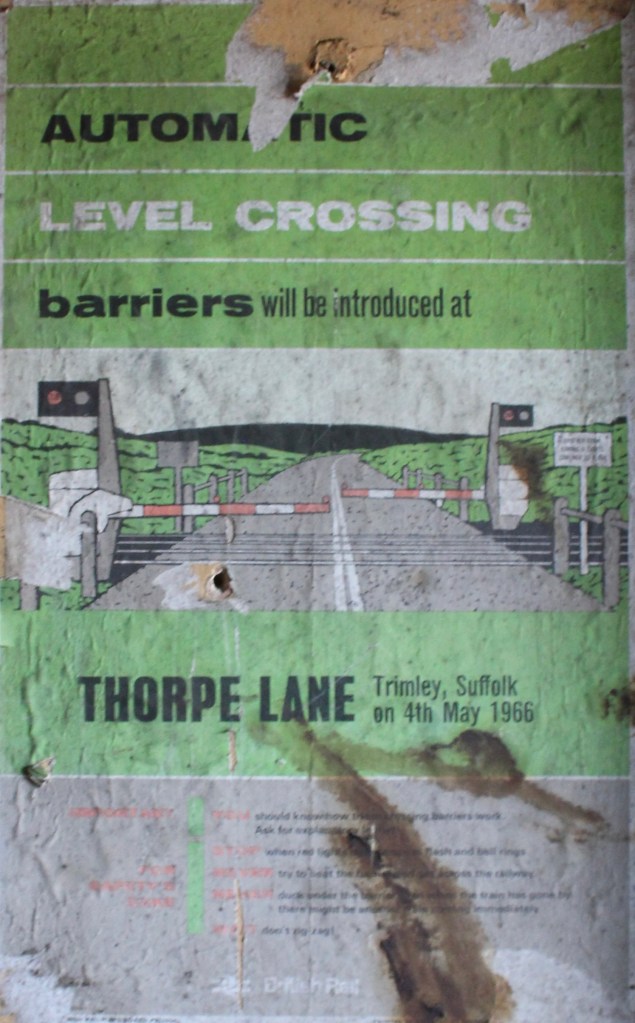
Notification of the change to automated barriers at Thorpe Lane in 1966. 2019 LR
Subsequently replaced again in 2020

The Brake Goods building in 2019 LR …
…when the former Save Trimley Station Community Trust were operating.
LR
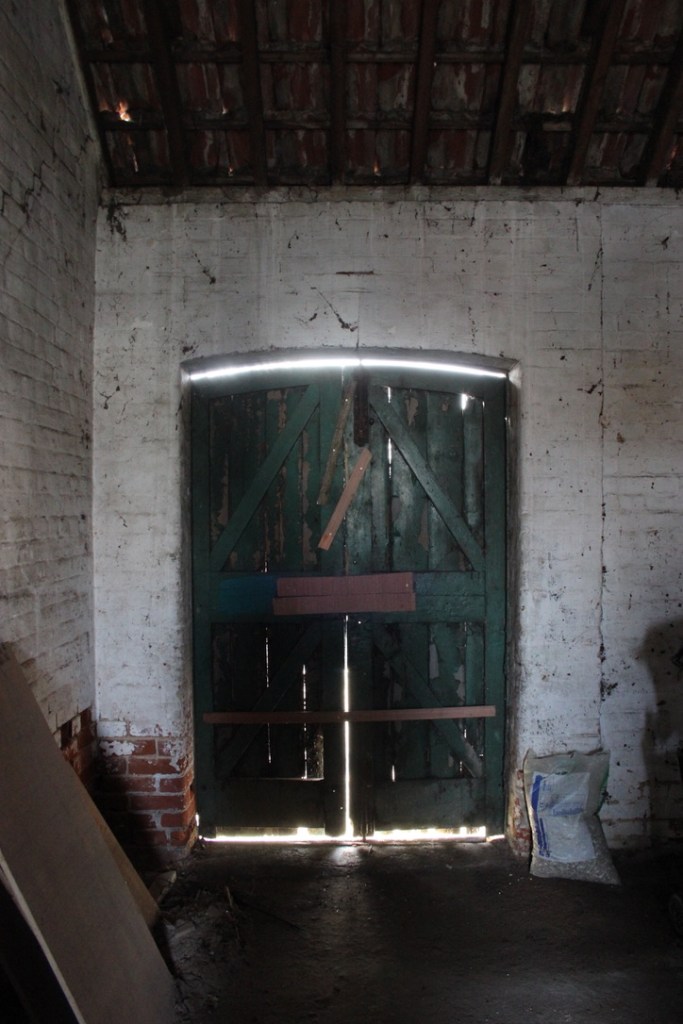
The interior of the Brake Goods store
2019 LR

Trimley Station, prior to being boxed in for safety reasons.
2019 LR
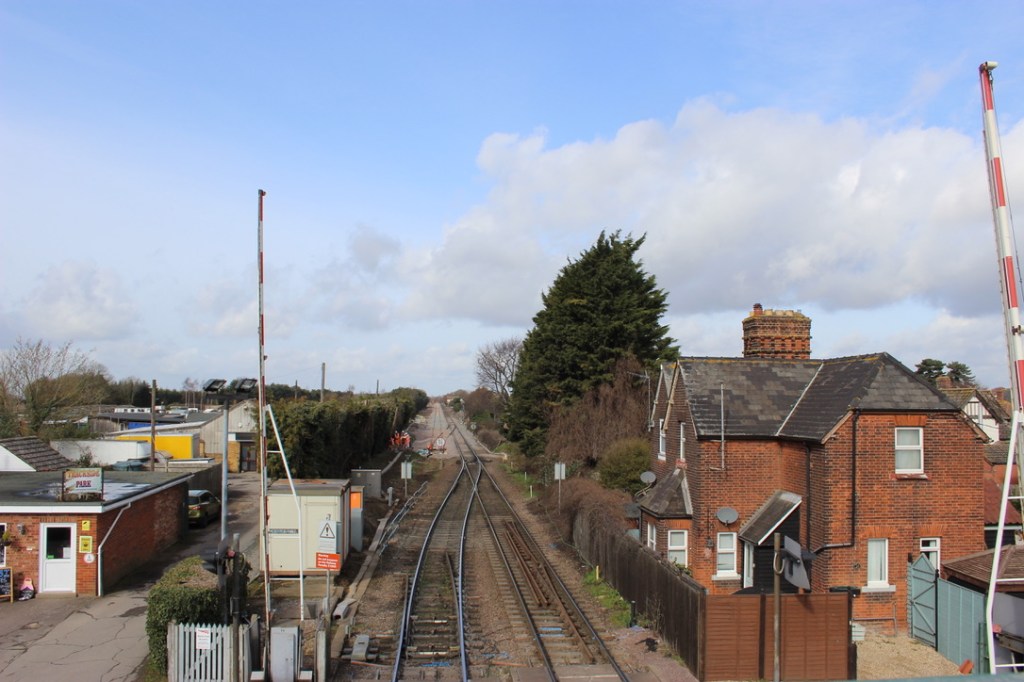
View of the upline from the Foot Bridge. Note the Gatekeeper’s cottage on the right.
2019 LR
This is how the Station Building looks today, down but definitely not out. We can restore, repair and regenerate this charming little building.

The Front entrance November 2025
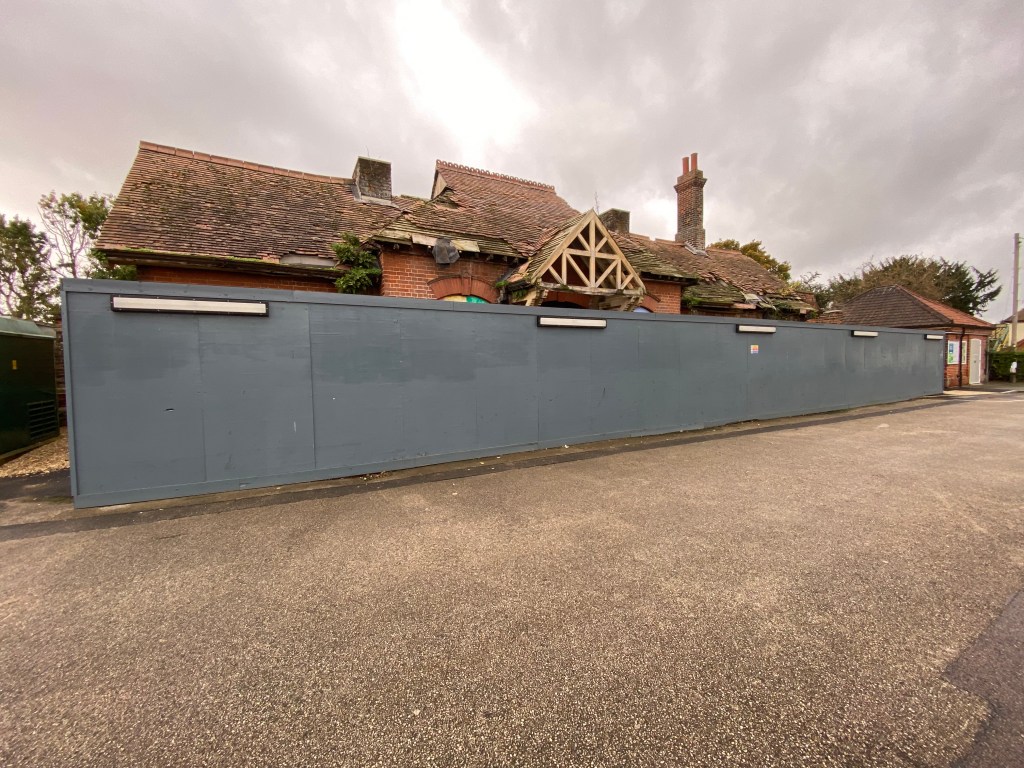
The whole frontage of the building. November 2025
We live in the United Kingdom, the country which created the locomotive two hundred years ago. It is important to preserve our industrial and architectural heritage, not least because it was a time of growth, opportunity and prosperity. The nineteenth century railways provided mass employment for many and the burgeoning networks enabled career opportunities for those who were prepared to travel. Well known Trimley names such as Lummis and Brame migrated to the area from the Scole district; not such a daunting distance once they could meet up with their distant families via the trains.
Let’s respect the people and places who made this possible.
We can regenerate the station to proved a warm welcome to visitors and become a source of pride for the residents.
Our local and wider history is important.
Today, stepping off the train at Trimley is a dismal experience. The well-tended plants and their carer work hard to counteract the shocking state of the building. Hardly the best of welcomes to our village, which has much to offer the casual visitor with its nature reserve and the extensive walks available around the Trimleys. But long-term neglect of the station by consecutive companies has worked against the station building, despite the hard work and valiant efforts of the previous Trimley Station Community Trust, to whom I take my hat off.
This remains a building worth saving. The possibilities for its future use far exceed senseless obliteration because of its present condition. Other communities have transformed seemingly ugly wrecks into opportunities for people and communities to share events, conversation and pleasure. The potential for Trimley Station is huge.
This is the 200th year of the train. Join the group and celebrate by regenerating the station building for community use.
Support the Trimley Station Regeneration Project
Let’s make the Station building work for everyone.
Long live the trains.

I
… and while you are here, let’s remember the romance of the railways…
Addlestrop
Yes. I remember Adlestrop—
The name, because one afternoon
Of heat the express-train drew up there
Unwontedly. It was late June.
The steam hissed. Someone cleared his throat.
No one left and no one came
On the bare platform. What I saw
Was Adlestrop—only the name
And willows, willow-herb, and grass,
And meadowsweet, and haycocks dry,
No whit less still and lonely fair
Than the high cloudlets in the sky.
And for that minute a blackbird sang
Close by, and round him, mistier,
Farther and farther, all the birds
Of Oxfordshire and Gloucestershire
Edward Thomas, Poet, 1878 – 1917
If you would like to learn more about the new Restoration/Regeneration Project for Trimley station you may email the group at: trimleystation1891@gmail.com You might like to take a look at the new Facebook Page for the project: Trimley Station Restoration Project.
You might also like to read another post about Trimley Station when the earlier campaign was still operating: https://trimleystmartinrecordersblog.com/2019/03/15/adrian-reynolds-and-the-victorian-heritage-of-trimley-station/
If you have any comments or would like to be part of the Trimley St. Martin project, please contact me at:
trimleystmartinrecorder@gmail.com
Liz Rastrick
Trimley St. Martin Village Recorder
29 November 2025
Supported by Trimley St. Martin Parish Council
1] Gloucestershire Sheet XXV.SE Surveyed: 1882 to 1883, Published:1884 Size: map 31 x 46 cm (ca. 12 x 18 inches), on sheet ca. 43 x 58 cm (ca. 17 x 23 inches)
[2] http://www.maberly.name/biographies.htm#am

 Trimley St Martin Recorder's Blog