Two survivors of the Second World War
1939 – 1945
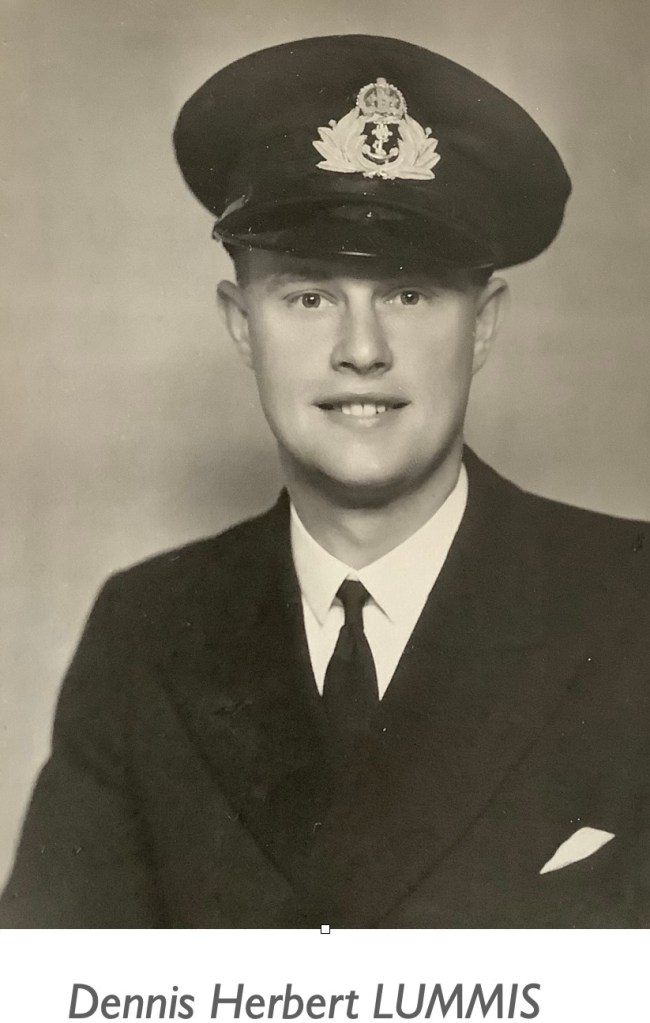
Locally born Dennis Herbert Lummis was the son of Charles and May Lummis and one of Henry and Elizabeth Lummis’s many grandchildren. His father, Charles Lummis, served in the First World War and returned to his prime job in the pay of the Inland Revenue when it was over, moving to various posts around the country. But Dennis always regarded Trimley as his home.
War was declared on Germany on 1st September 1939 and by the end of the month on 29th September a Register was compiled of all civilians in England and Wales. This information was used to create Identity cards and later to create the Ration books, which were introduced in January 1940. It is therefore possible to see that at this point, Dennis had not joined the armed services and that he and his sister Marjorie were living in Woodlands with their Aunt Kate and her husband, Herbert Rowe.
Dennis was working as a booking clerk when war broke out but like many others, his life changed when joined the Navy in 1940. As a young man he stood at 5’10½” with brown hair and eyes and a fresh complexion. His training commenced on a series of shore establishments starting in Devonport and then moving to other parts of the country. They included: The Wellesley; Royal Arthur; Drake; Victory and King Arthur. On 4th December 1941 at the shore establishment King Alfred, he was appointed as a temporary as a Sub Lieutenant, R.N.V.R. A distinguishing feature of the uniform was the wavy gold stripe on their jacket cuffs. The officers and men of the R.N.V.R. were known as the Wavy Navy.
His war years included being part of the perilous work involving the Atlantic Convoys. Towards the end of the War he was posted to the Mediterranean and amongst other actions was involved with the Spring 1945 offensive in Italy. From 29th February 1944 to 25th July 1945 he was the Commanding Officer of the Motor Gunboat HMS MGB 638; part of a flotilla guiding ships through minefields. ( It had been designated a Motor Torpedo boat in 1943.)
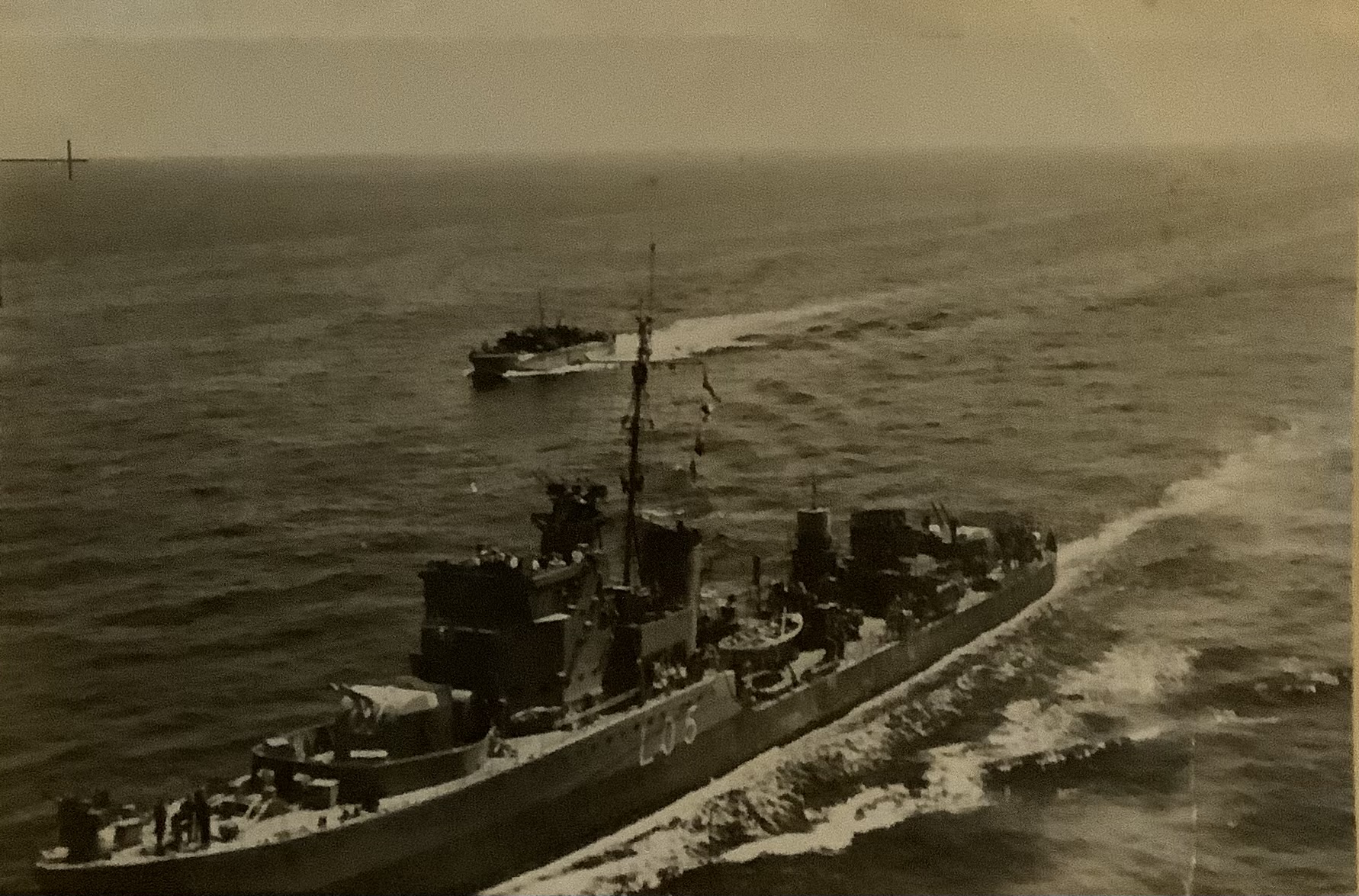
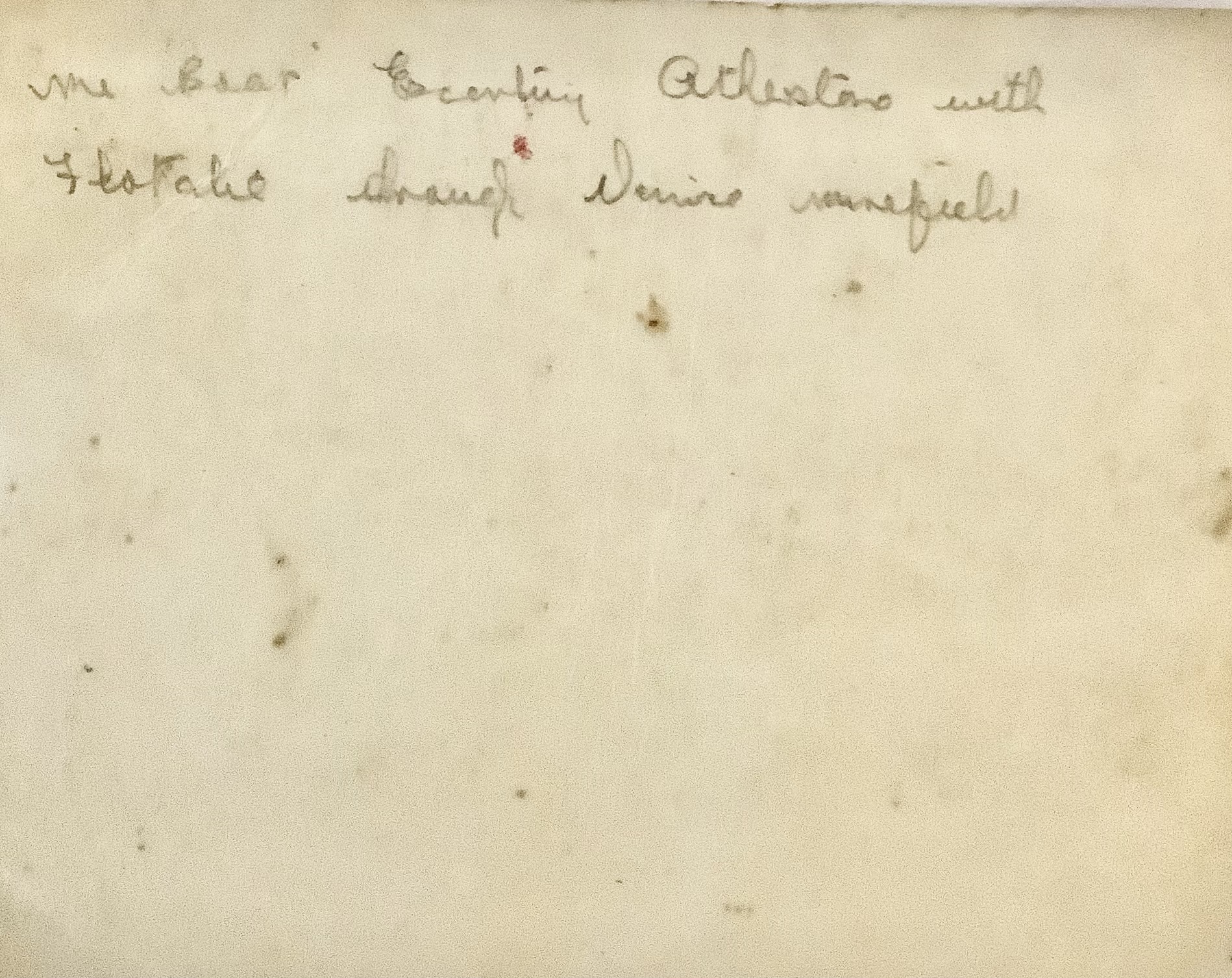
H.M.S. Atherstone being escorted through Venice Minefields
At the end of this period his Commanding Officer said this about Dennis Lummis,
“During this period he had conducted himself to my entire satisfaction. A keen, energetic, competent commanding officer who has given good support at sea and in harbour. He did not let eight months inactivity interfere with the fighting efficiency of his ship, and he was always ready for action fighting the enemy five times in his first seven patrols with my flotilla. A very good… officer to whom the flotilla is indebted. Ran his boat very well.”
In February 1945 he was awarded the Distinguished Service Cross.

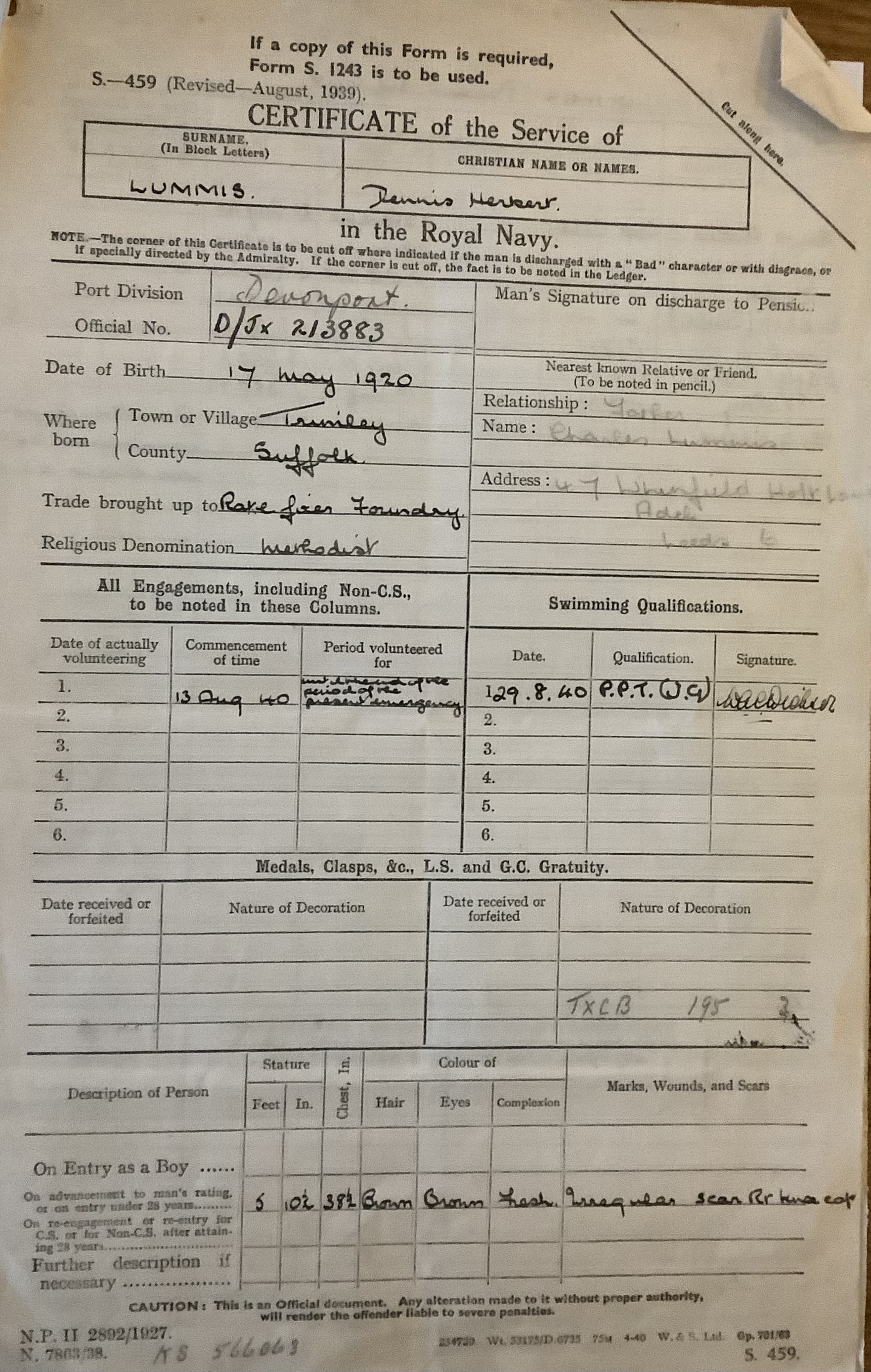
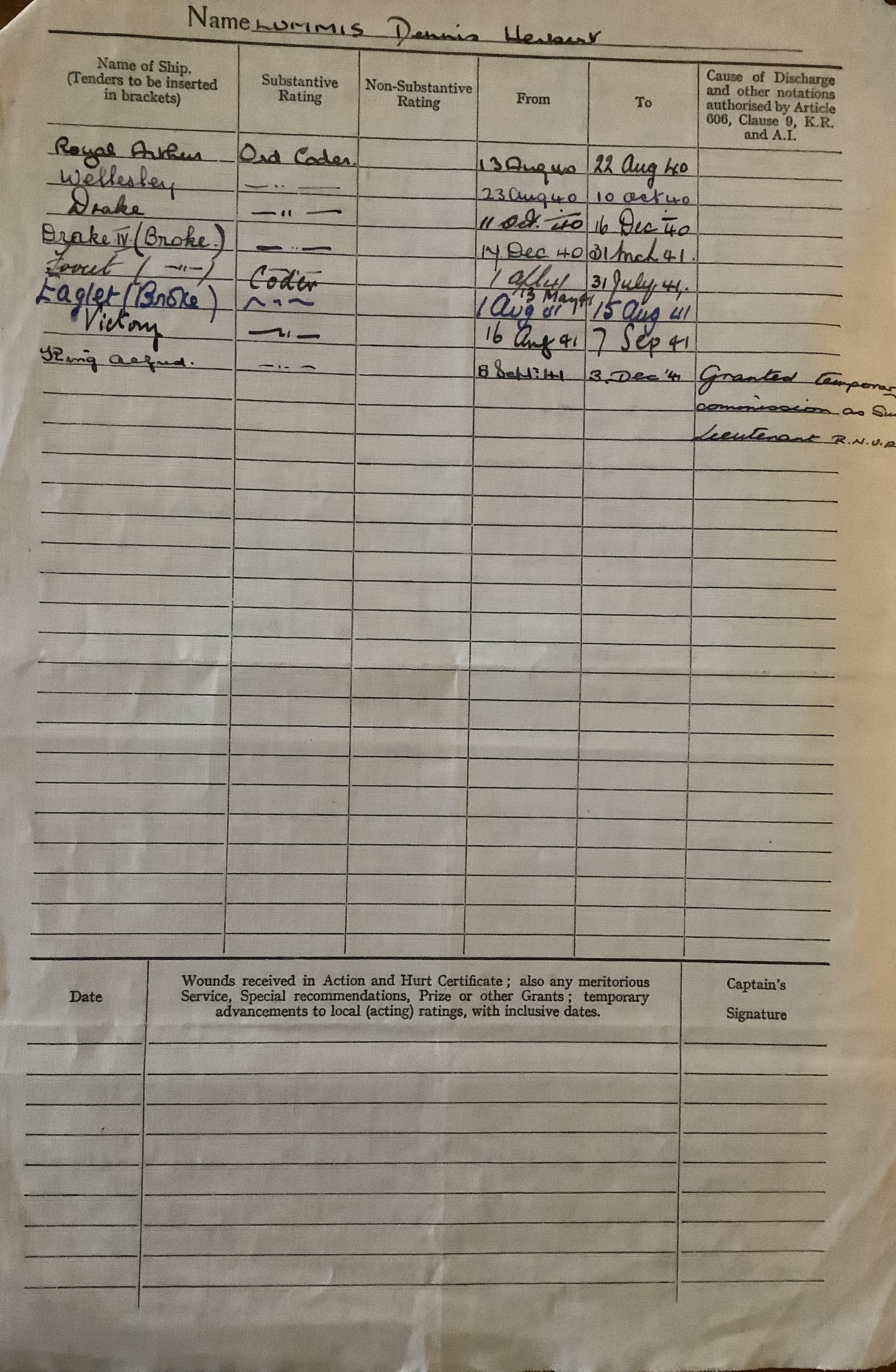
After Demobilisation he married Hazel Maude, returned to Trimley and lived at Rosecroft, now known as 249 High Road. Following the War there was a national shortage of teachers and huge push to recruit suitable candidates, one of whom was Dennis. He matriculated in 1946, the equivalent of passing ‘A’ Levels today, before moving on to one year’s intensive Teacher Training, becoming a Certificated teacher in 1949, specialising in Physical Education. He worked at Kesgrave and was heavily involved in local sporting activities. As a highly regarded teacher, he applied the aptitude and skills acquired during the war years and which were replicated in his teaching.
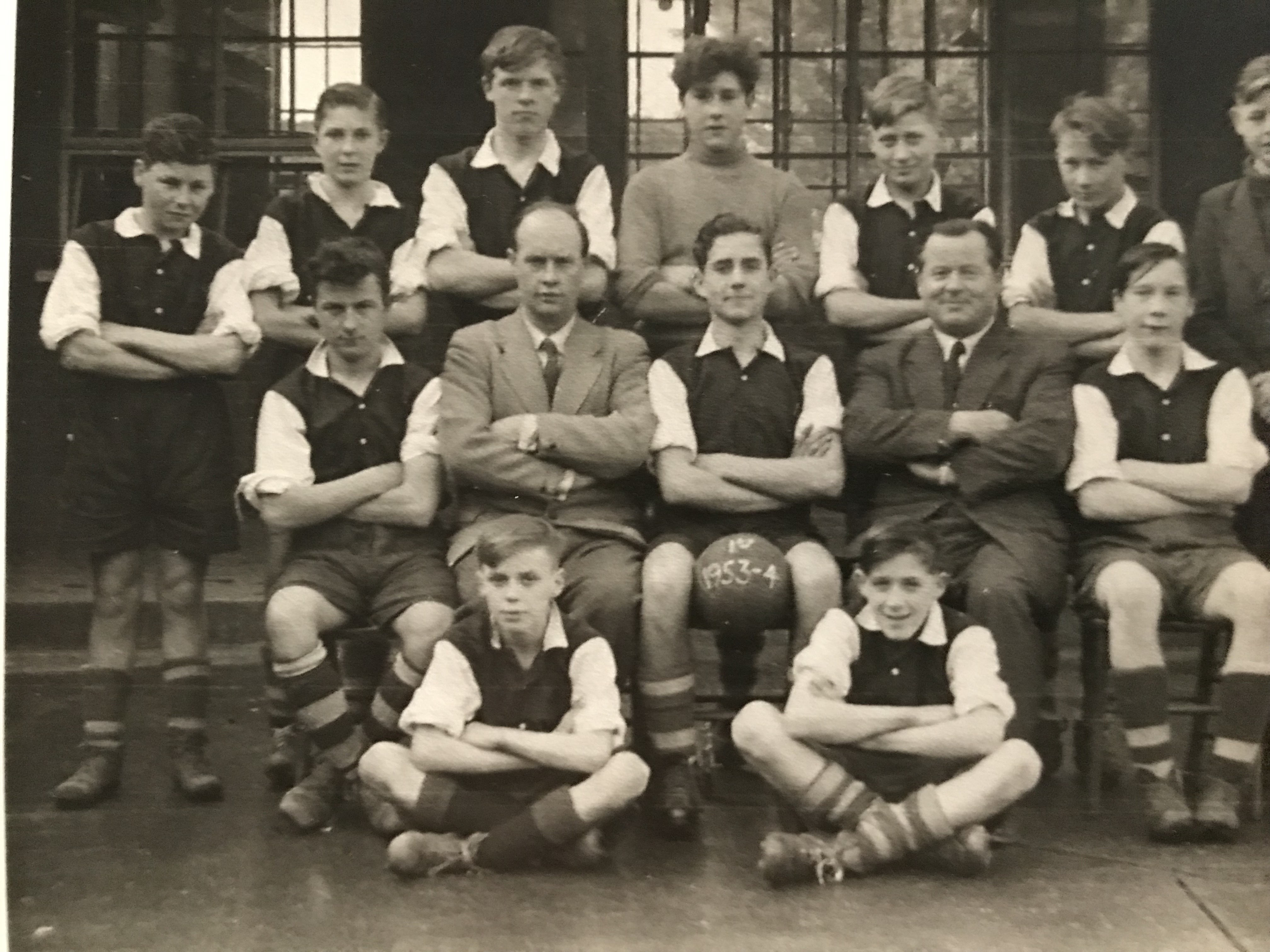
Dennis Lummis, seated on the left, during his teaching career in 1953/4

Robert James Biddle
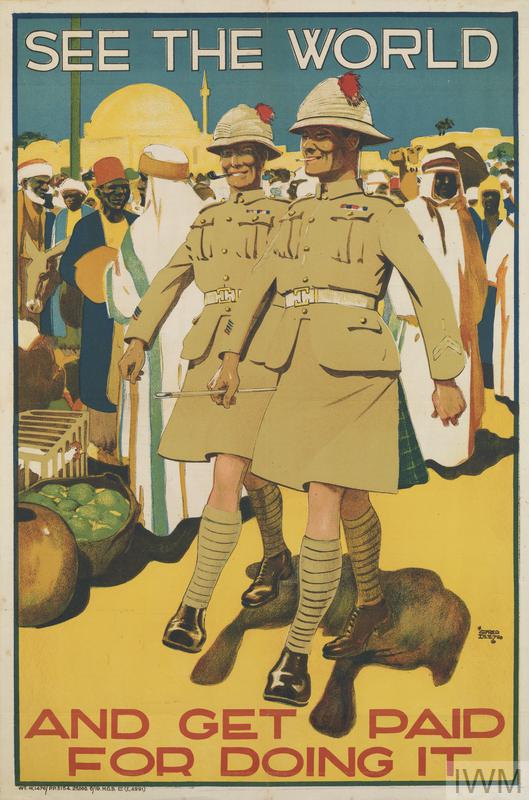
From the nineteen thirties onwards, the Army produced recruitment posters saying, “Join the Army and see the World”. Robert, or Bob, Biddle, as he was known, may not have been enticed by this statement but during the course of the Second World War, he certainly saw parts of the European and North African world generally unavailable to many until the rise of tourism in the nineteen sixties.
Robin Biddle,2 Bob’s son told me
“Dad was born 1915 in Braintree and died in 1977 (The same day as Bing Crosby.)
Before the war he was a Walls Ice Cream man with a cycle cart. He also helped build the Titan or Goliath crane at the air station, which wasused to lift seaplanes out of the water. He helped build the Radar masts at Bawdsey (300 ft tall ). After my parents married in 1936, Dad worked for a builder and continued this until he had to give up. He then became a school caretaker.”
Martin Biddle, also Bob’s son, informed me thatLance Corporal Robert James Biddle , Army Number 5831392 enlisted in the Suffolk Regiment at Bury St Edmunds on 19th April 1940. Four months later on 12th August 1940, he transferred to The Queens Royal Regiment. A further transfer to the 56th Reconnaissance Regiment occurred on 4th March 1941 and this was where he trained as a Driver Radio Operator. For this role he was required to maintain both the vehicle and the radio as well as operate them efficiently; a role requiring quick thinking and intelligence. He embarked from Scotland 31st October 1942, heading for North Africa. The history of the .Reconnaissance Corp is well documented3
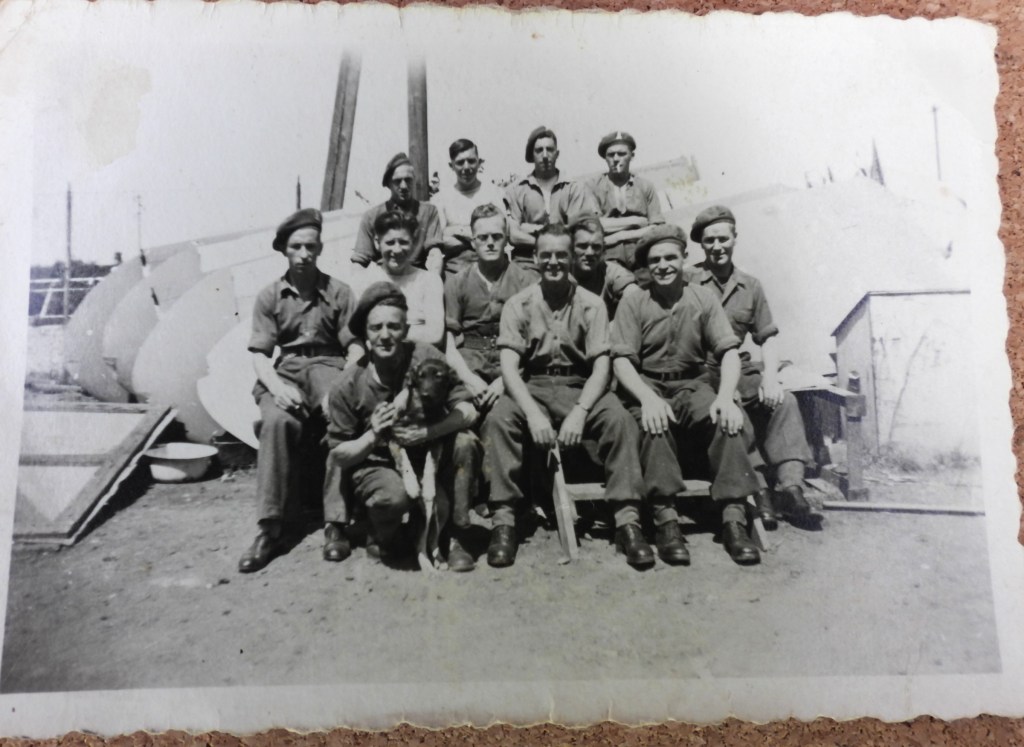
The 56th Recce Group
The Regiment operated small fast vehicles sometimes behind enemy lines and reporting back the enemy positions and strength. Bob Biddle saw action Algeria, Tunisia, Sicily, Italy and Austria and it was the 56th Reconnaissance Regiment who were given the honour of leading the 8th Army into Austria the day before hostilities ceased in Europe.
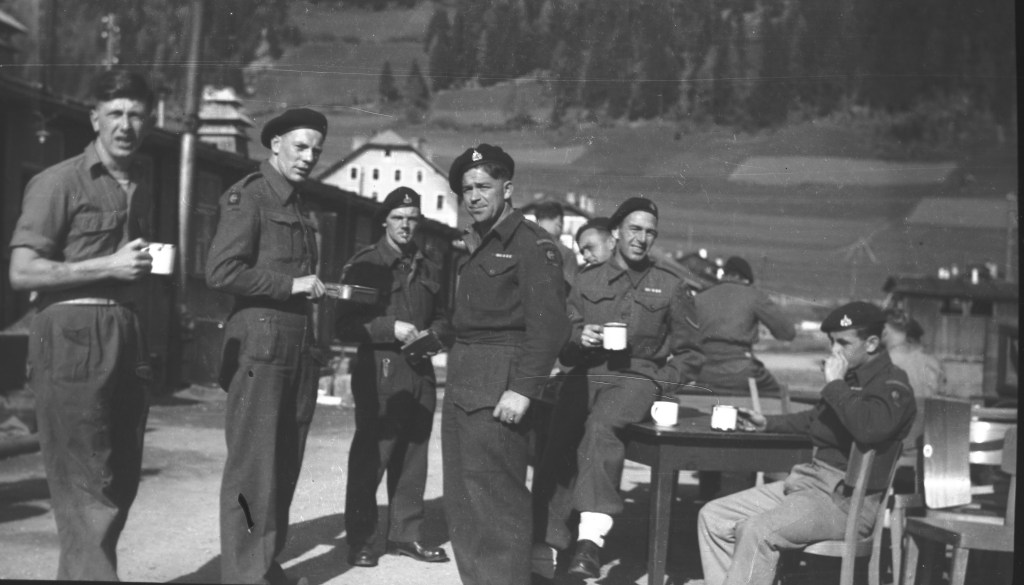
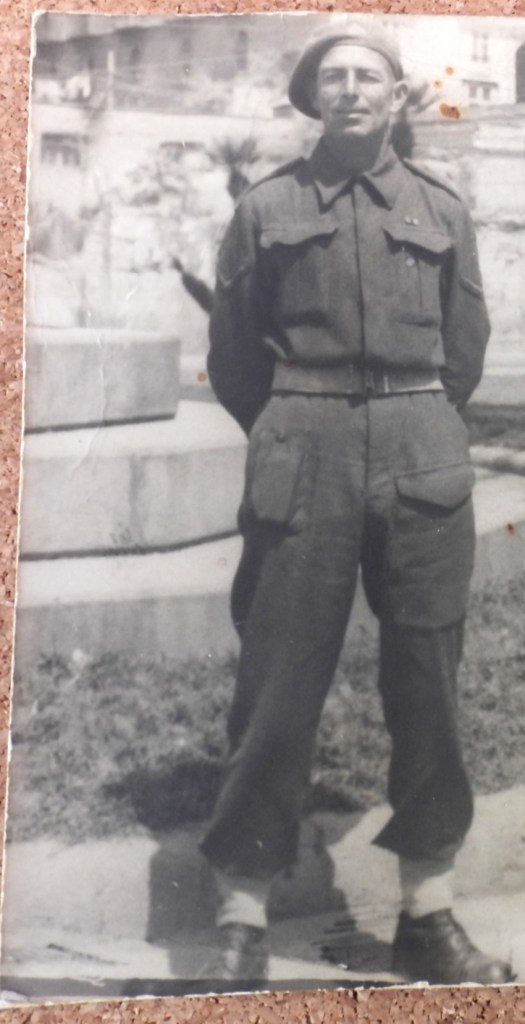
Bob Biddle, seated on the table, in Northern Italy.
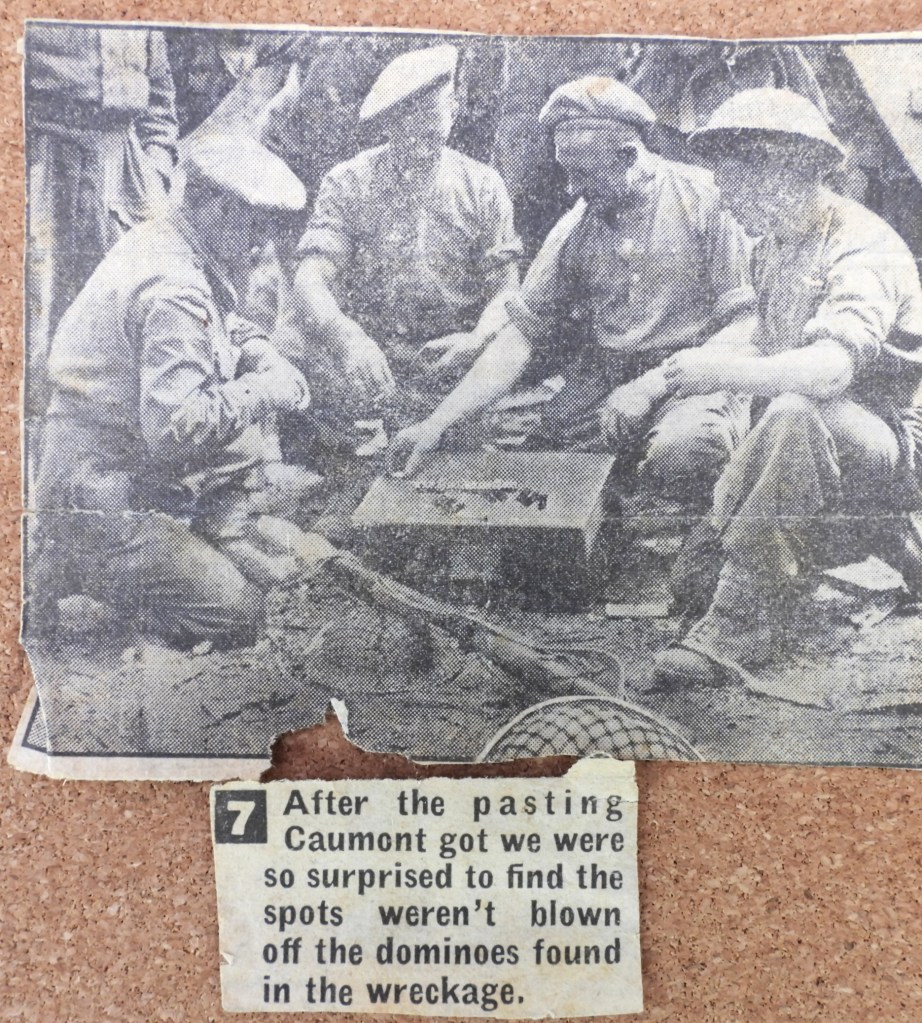
Newspaper cutting from Robin Biddle’s personal collection.
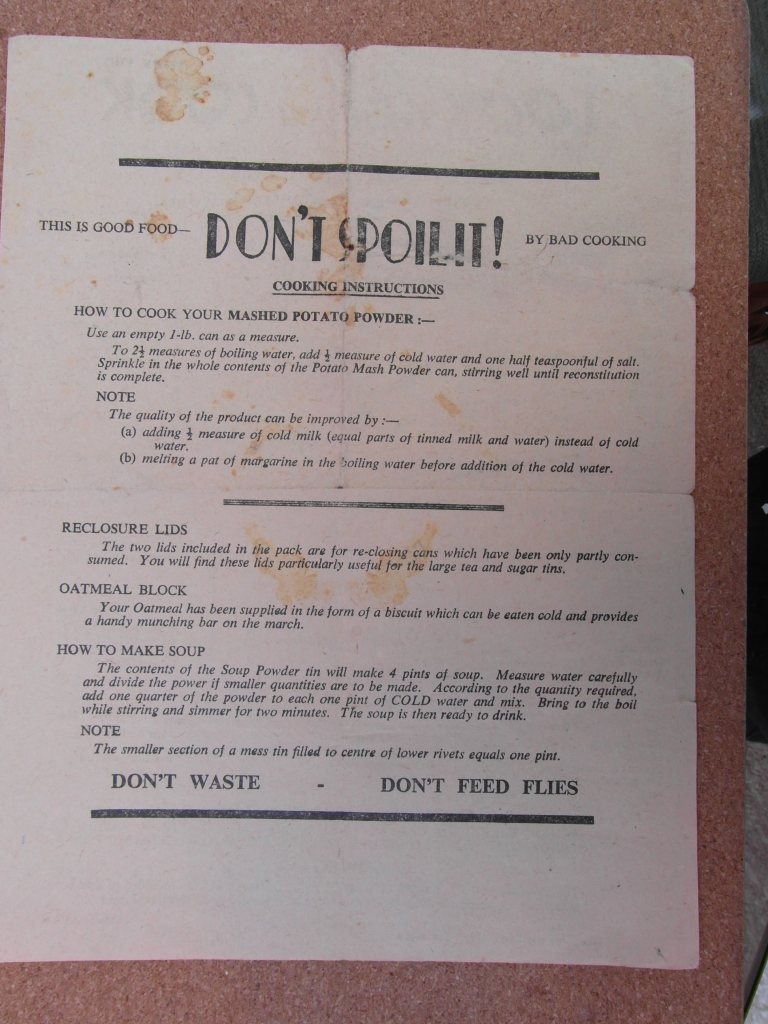
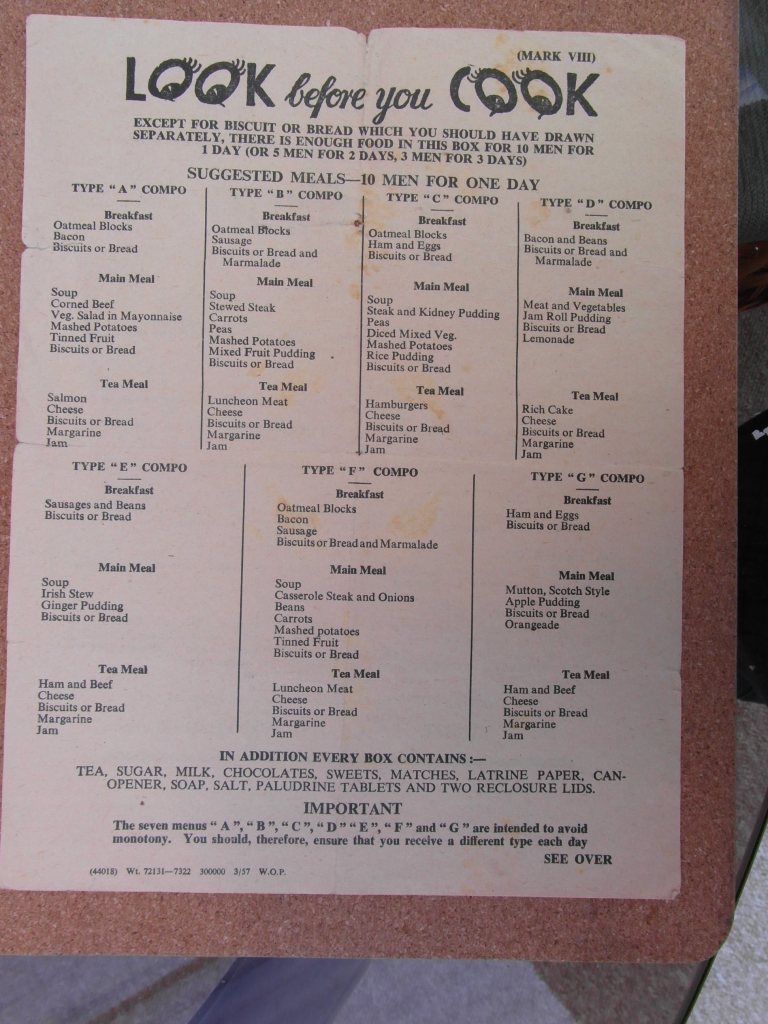
Instructions from a Rations Box for ten men.

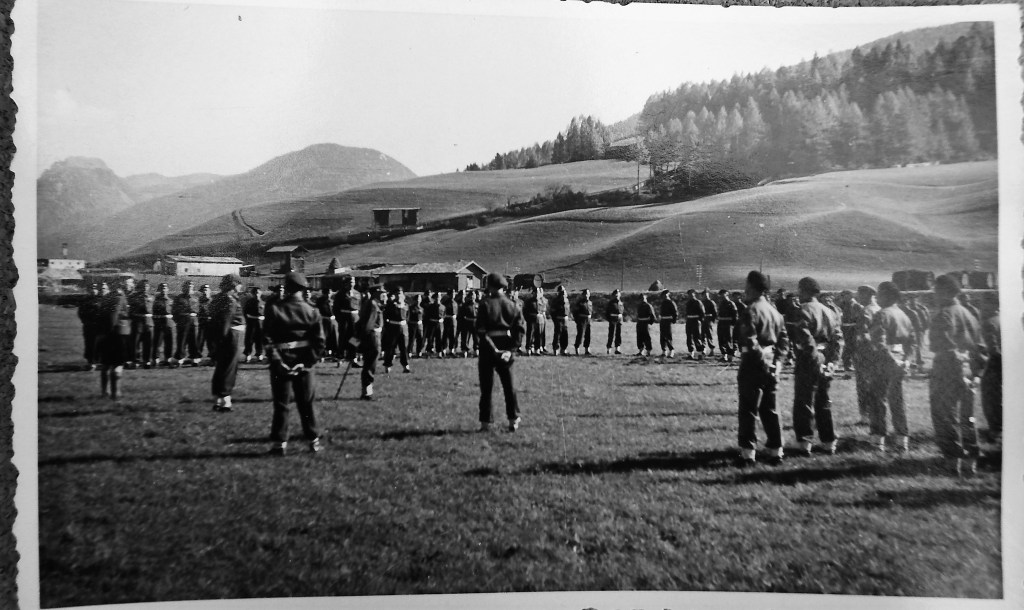
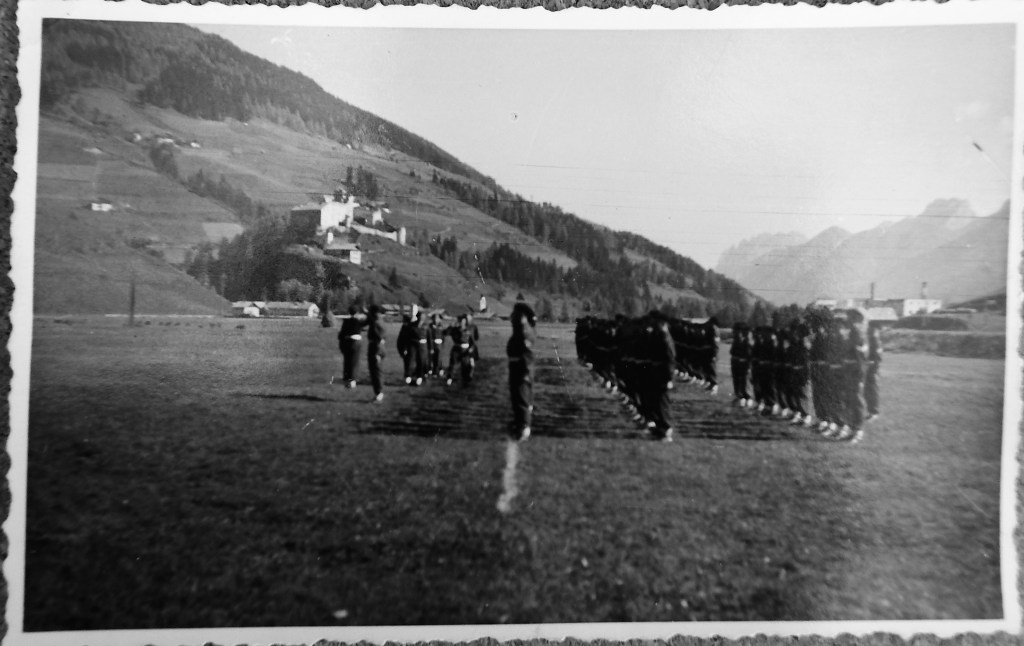
Images from the Victory Parade of the 56th Reconnaissance Regiment
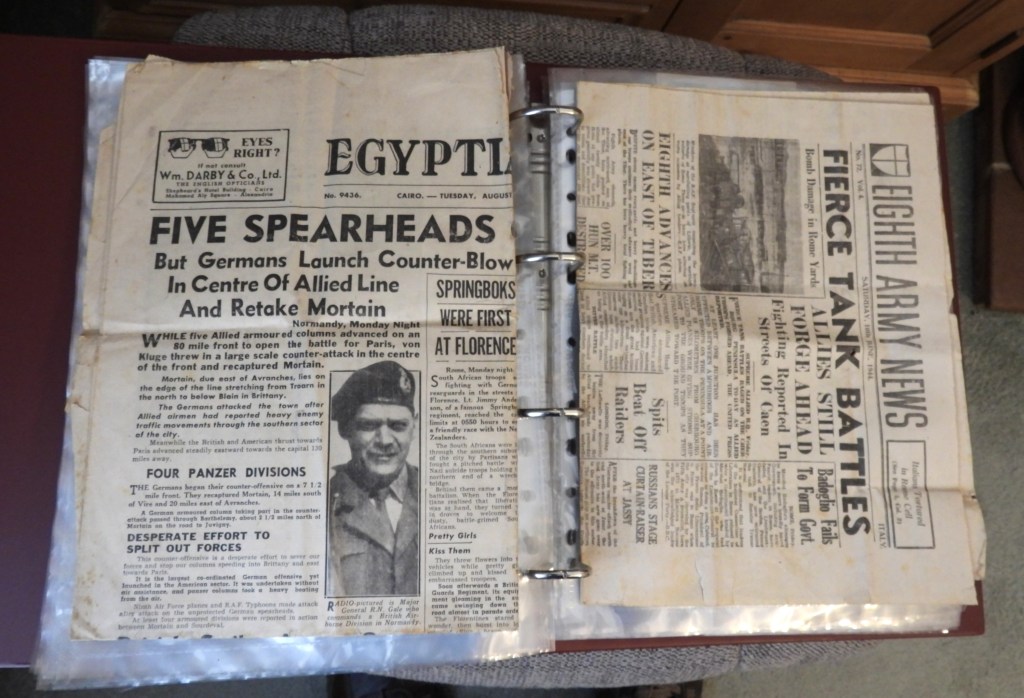
A page from Bob Biddle’s 1939 – 1945 Scrapbook
This short article focuses on two men, both from Trimley. Seemingly ordinary men until they were called upon to leave their everyday lives, when they demonstrated courage and their own extraordinary attributes, as did all those who engaged in the blast of war.
It would be remiss of me not to remember the Civil Defence individuals, who provided reassurance to the general population through their practical, everyday actions. The A.R.P. (Air Raid Precautions4) teams was formed in 1938, after the introduction of the Air Raid Precautions Act of 1937. As part of Home Defence, they also ran the risk of encountering danger but gave their time and energies freely and fearlessly.
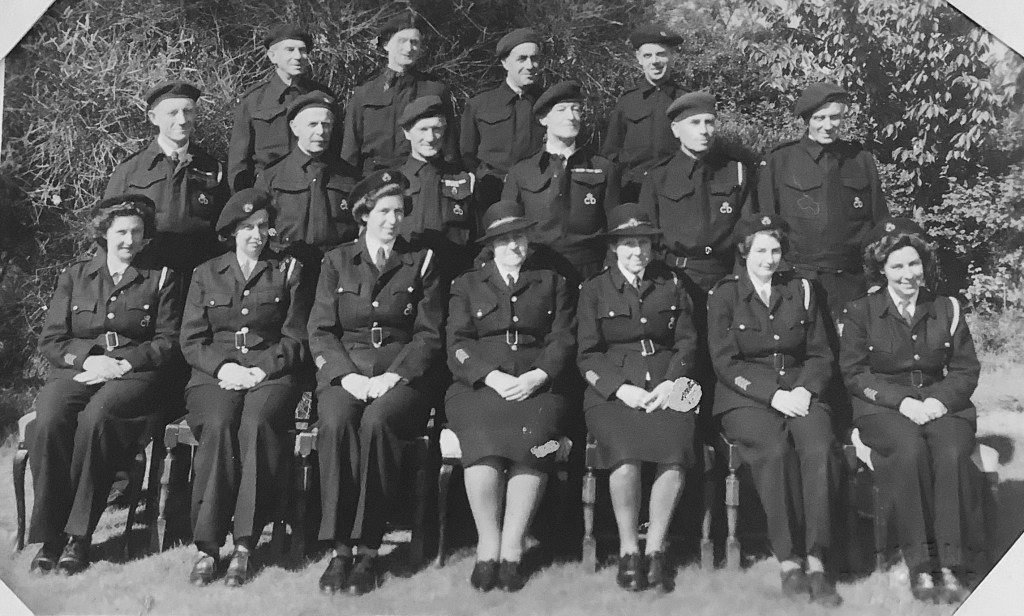
The Trimley A.R.P group. Chrissie Day is seated in the front row on the far right.
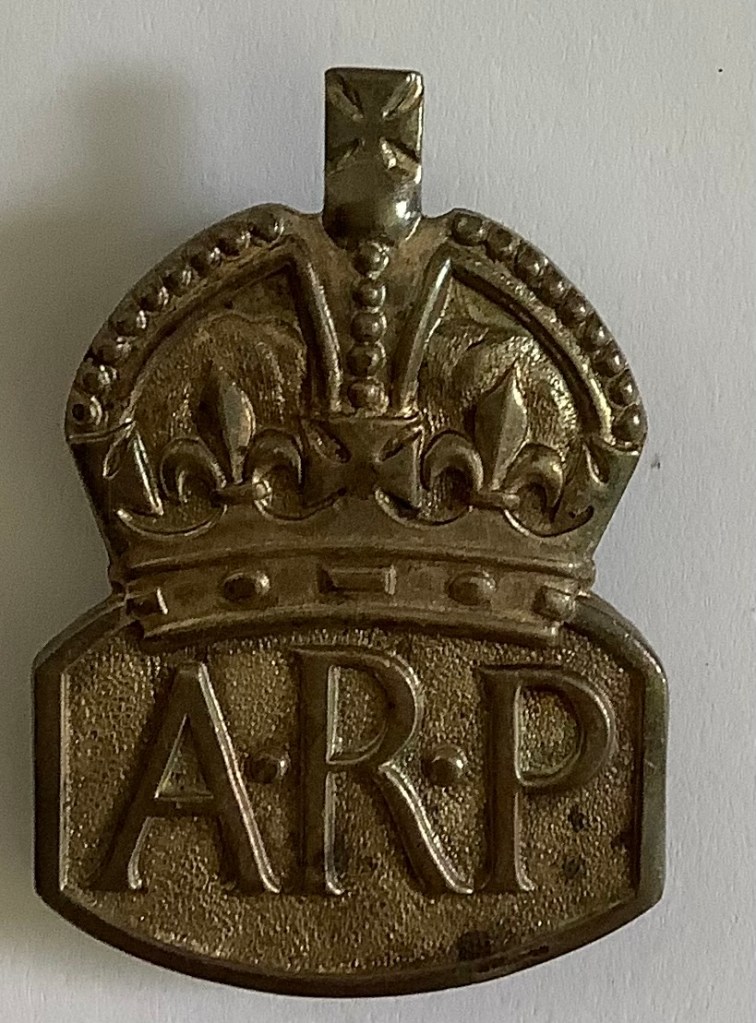
The A.R.P. badge
I am grateful to several people for the information relating to these two men. Caroline Lummis Corkhill and her family provided images and information concerning her father, Dennis. Thank you. Robin and Martin Biddle are responsible for all the information about their father Robert Biddle. I am grateful to both of you, thank you. Thanks also go to Erica Entwistle and Tom and Corine Day for the images relating to the A.R.P.
If you have any comments or would like to be part of this Trimley St. Martin project, please contact me at:
trimleystmartinrecorder@gmail.com
LR 21/09/2024
- See the World (Art.IWM PST 7687) whole: the image occupies the whole, with the title integrated and positioned across the top edge, in white outlined
black. The text is integrated and positioned across the bottom edge, in red. All held within a green and blue border.
image: two British infantrymen walk through a crowded Near Eastern bazaar, both in khaki uniform including a kilt and ‘sola topee’ helmet.
One smokes a cigarette, th… Copyright: © IWM. Original Source: http://www.iwm.org.uk/collections/item/object/16583 ↩︎ - You can read more about the A.R.P. here: https://www.legislation.gov.uk/ukpga/Geo6/1-2/6/enacted and here: https://www.iwm.org.uk/history/8-objects-used-by-air-raid-wardens-during-the-blitz ↩︎

 Trimley St Martin Recorder's Blog